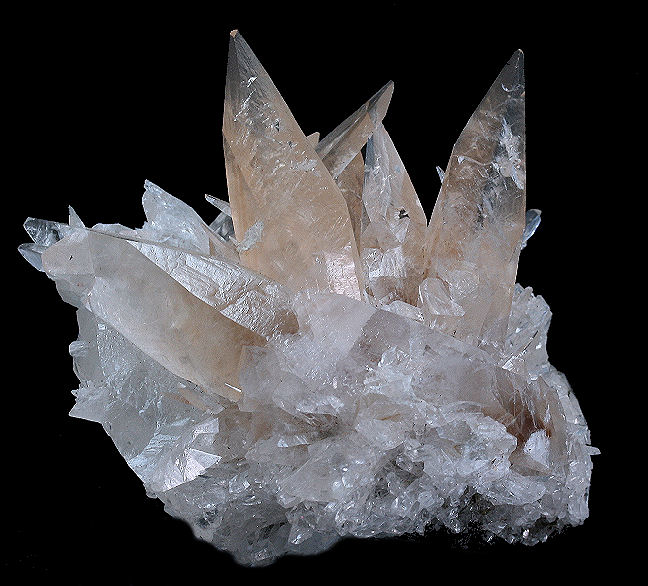
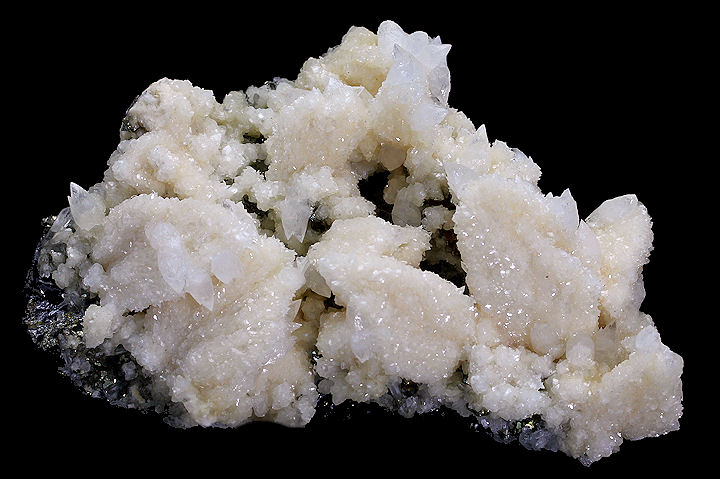
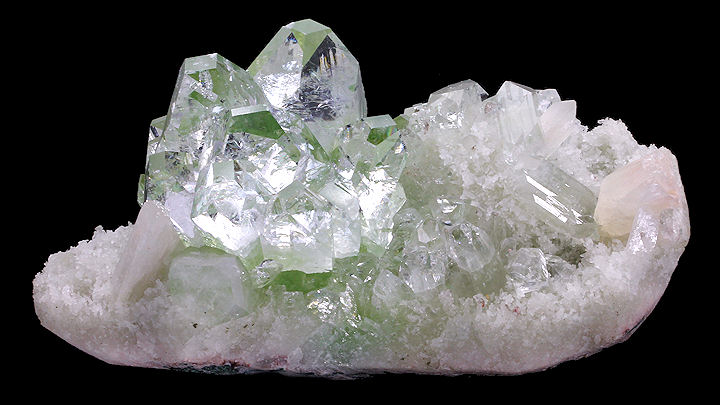
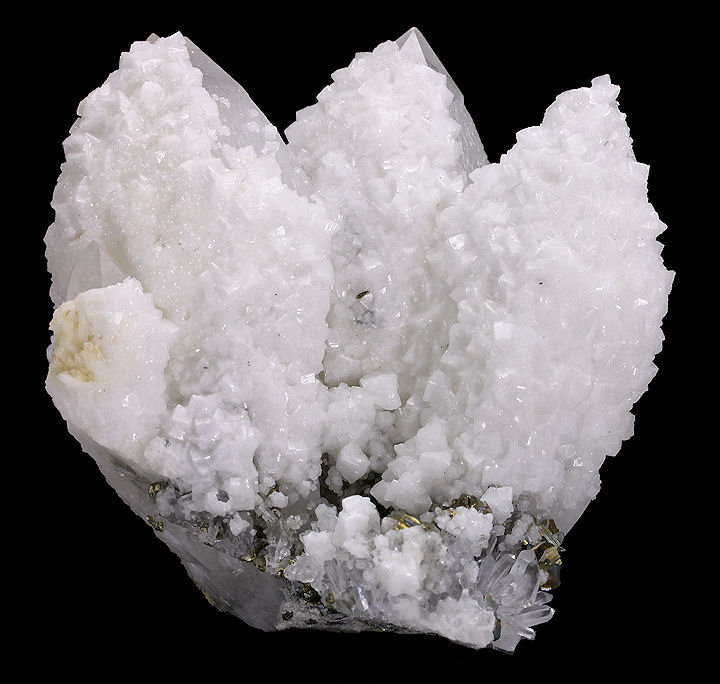
Check out the Fluorite, Azurite on Clay, Wulfenite Crystals on Matrix, Apophyllite on Calcite, Atacamite, Fluorite with Calcite, Tangerine Quartz, Calcite Rosette with Pyrite, Blue Barite, Hubnerite with Quartz, Kyanite with Quartz, Fluorapophyllite with Stilbite on Chalcedony, Quartz & Calcite on Chalcopyrite, Barite Crystal Sprays with Sulfur, Disco Ball Fluorapophyllite with Stilbite & Scolecite, Pyrrhotite on Quartz, Pyrite ps. after Chalcopyrite with Sphalerite, Quartz & Dolomite with Pyrite, Barite on Fluorite, Dolomite ps. after Calcite on Sphalerite and Pyrite with Quartz mineral specimens on this page.
Huanzala Mine, Huallanca District, Dos de Mayo Province, Huánuco Department, Peru
8 x 7.5 x 4 cm
Ex-Edward David Collection
$900
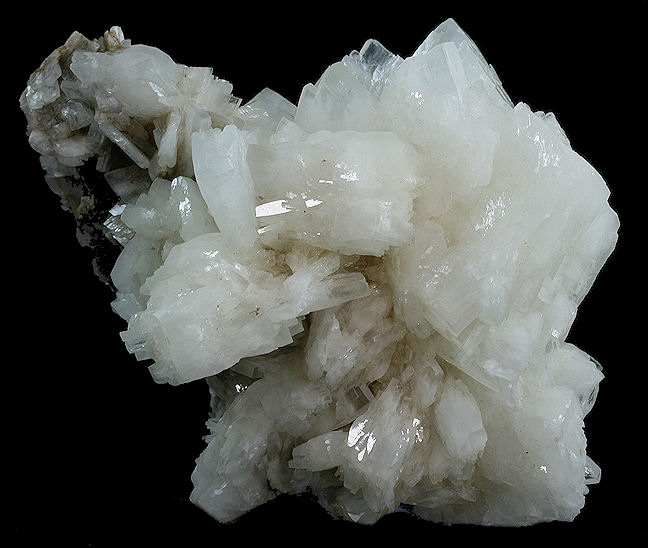
Fluorapophyllite Crystals with Stilbite on Chalcedony
Jalgaon, maharashtra, India
10.5 x 5.5 x 5.5 cm
$275
#J9058
#J9069
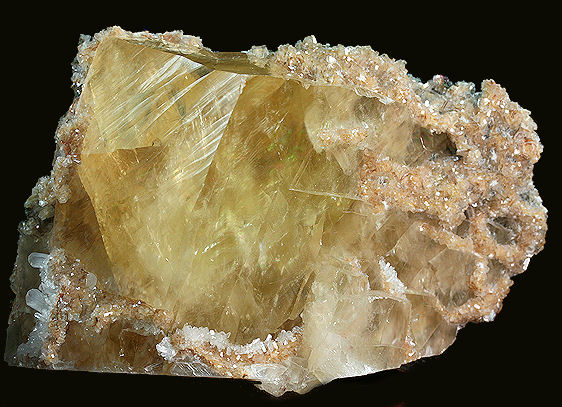
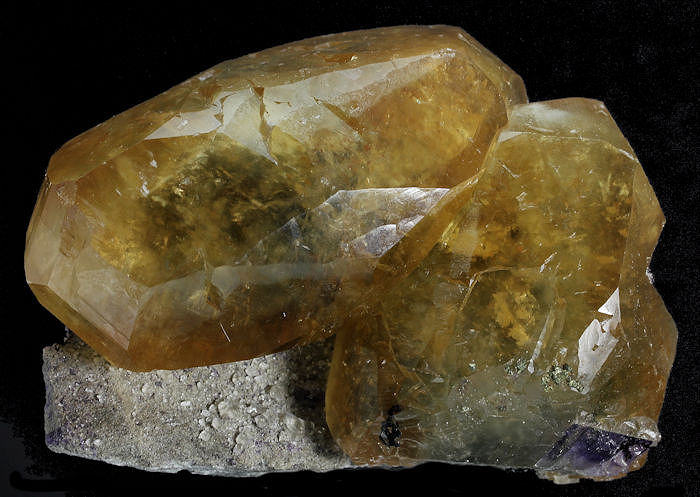
Stunning, pristine, gemmy and glowing golden Calcite crystal on nicely trimmed matrix. The Calcite is 5.5 cm across the top, 6 cm down and 4.5 cm thick. A real beauty !!
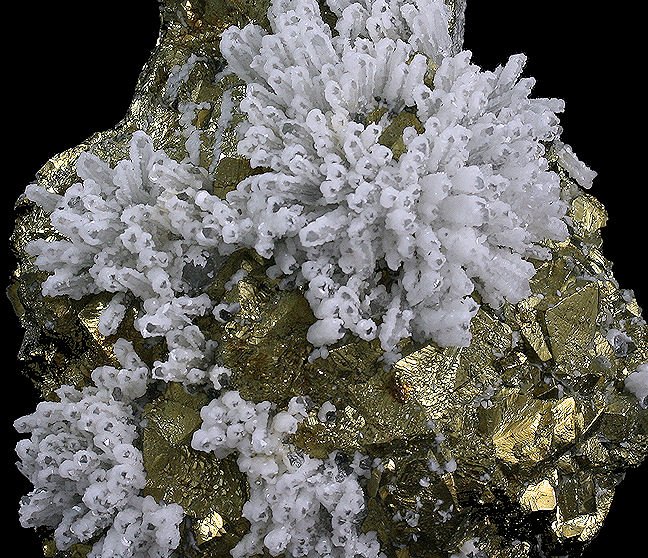
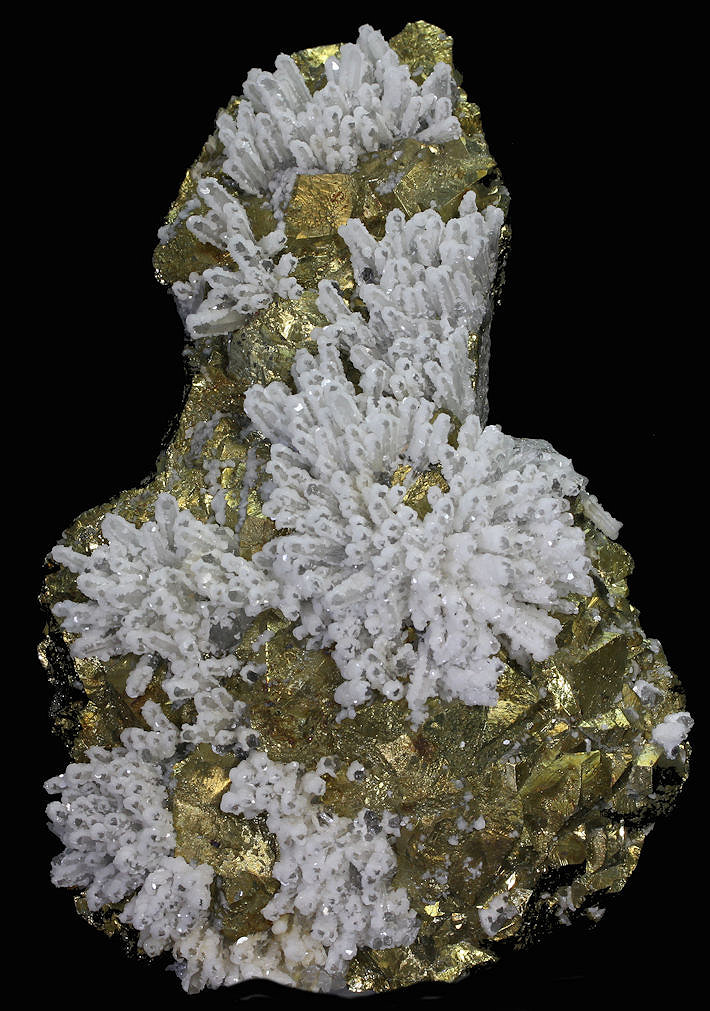
Superb Boldut Mine specimen of golden Chalcopyrite (solid plate of crystals) with stunning outgrowths of Calcite coated Quartz needles. In pristine condition and comes with a custom made, labeled stand.
Yellow Calcite Crystal on Matrix
Jalgaon, Maharashtra, India
10.5 x 6.1 x 5.5 cm
$400
SOLD
Quartz & Calcite on Chalcopyrite
Boldut Mine, Cavnic, Maramures, Romania
13.5 x 8.5 x 3.5 cm
$4,000
#J9105
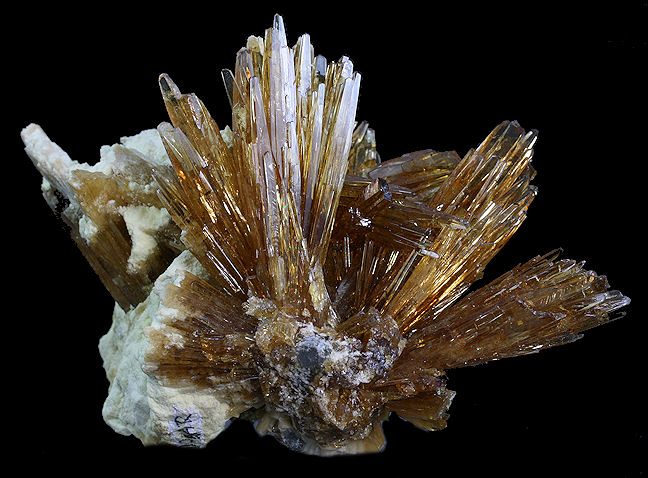
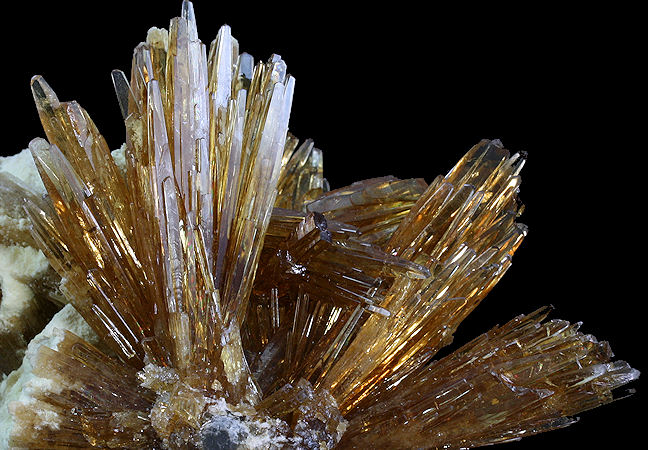
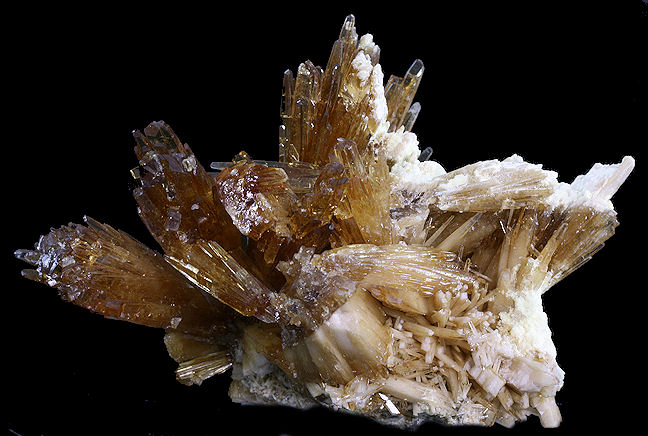
Excellent specimen of lustrous, root beer colored crystal sprays of gemmy Barite with Sulfur on matrix - from the Ed David Collection.
#J9016
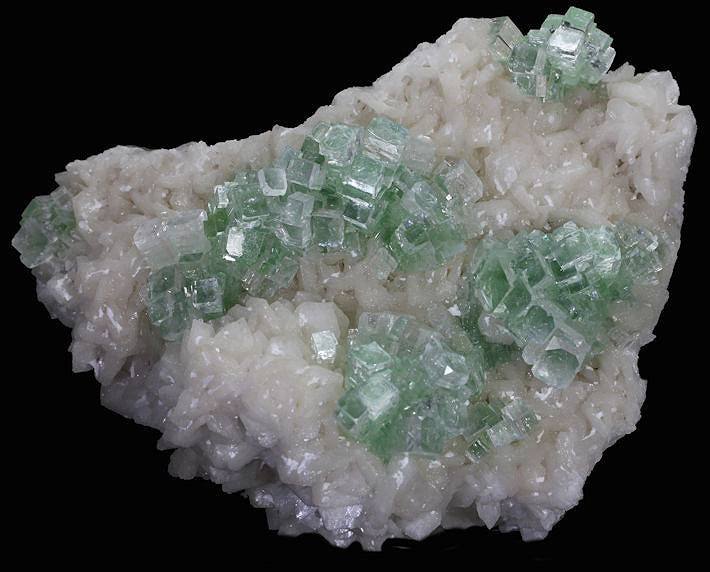
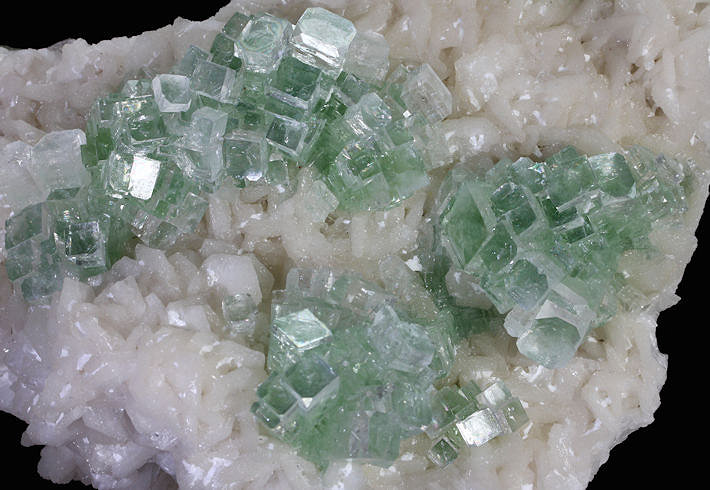
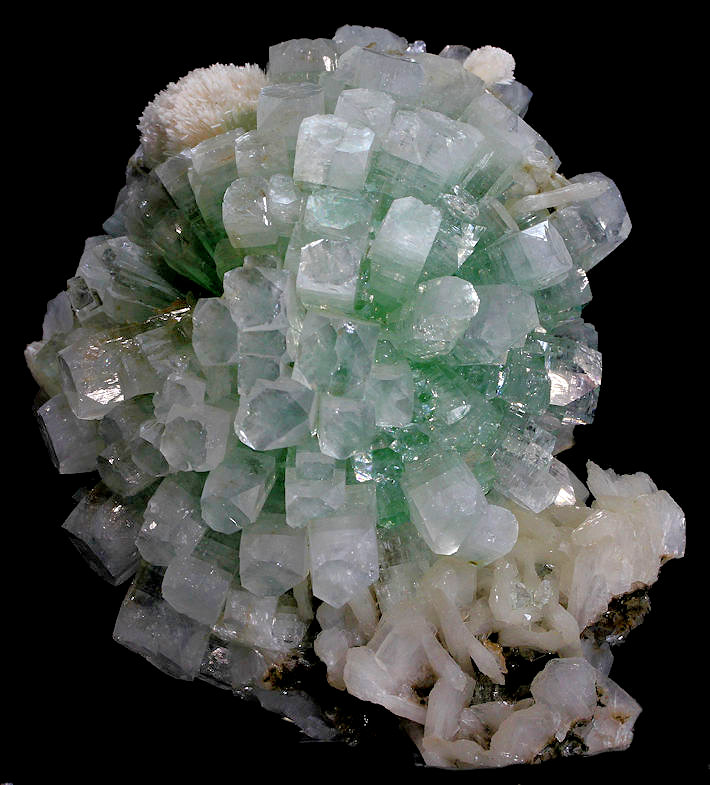
Absolutely fabulous specimen from the famous well find a few years ago. Nicely distributed clusters of gemmy, shimmering light green pseudocubic Fluorapophyllite flat top crystals on a matrix of creamy white Stilbite. Presents beautifully on a naturally formed base. These are becoming very hard to get, especially of this quality. I was recently at the 2008 Tucson Show and saw very few - so get this great specimen for your collection, as it will only increase in value.
Barite Crystal Sprays with Sulfur on Matrix
Machow, Poland
12 x 8.5 x 7 cm
Ex-Edward David Collection
$2,500
Fluorapophyllite on Stilbite
Momin Akhada, Well Pocket Find near Rahuri,
50 km north of Ahmednagar, Maharashtra State, India
17 x 12.5 x 10 cm
Ex-B.E. Lockhart Collection
$4,000.
#J9159
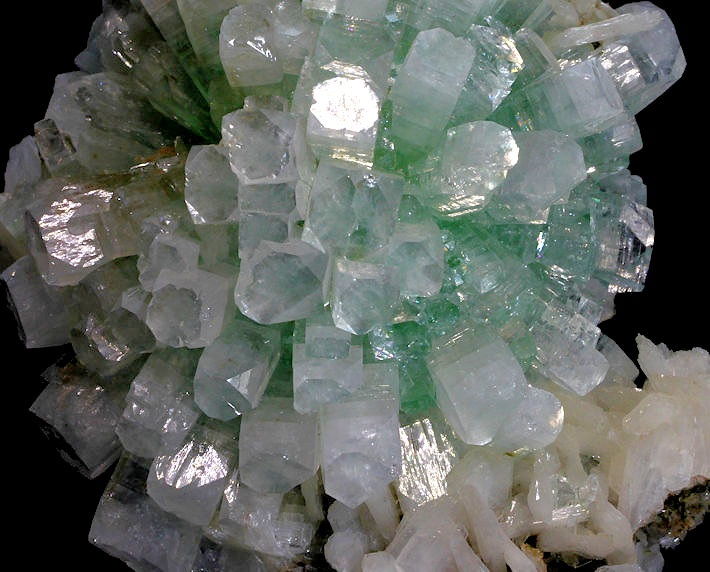
A stunning radial cluster of highly lustrous, colorless to green, pseudo-cubic Fluorapophyllite crystals from the famous find of 2001. Rarely available on the market these days. The specimen has great sparkle and the small tail of pearlecent Stilbite blades adds a nice accent. The piece is in very good condition.
Fluorapophyllite Crystal Cluster ("Disco Ball") with Stilbite & Scolecite
Rahuri, Ahmadnagar, Maharashtra, India
12.5 x 9.5 x 6.5 cm
$2,800
SOLD
#J9158
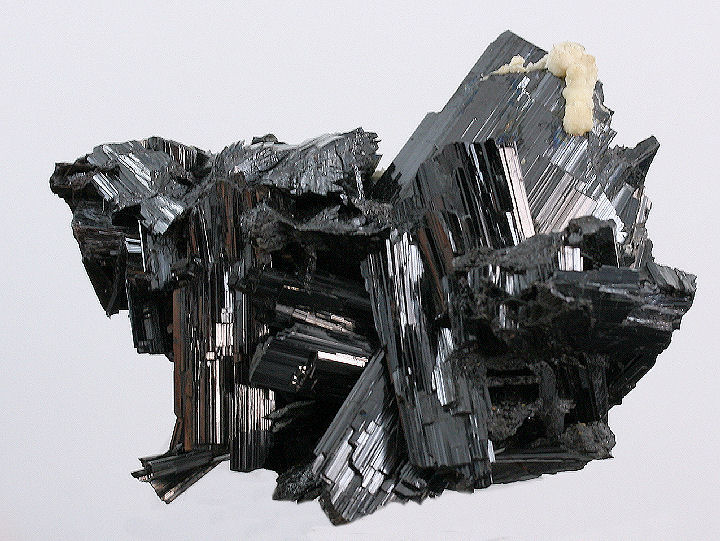
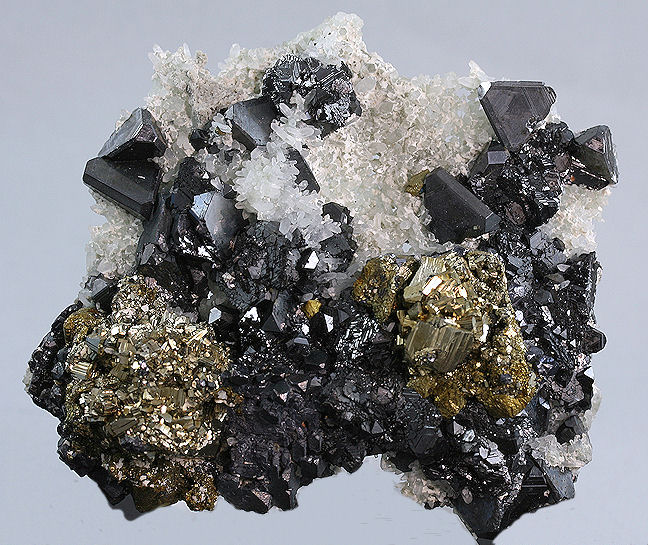
Aesthetic specimen of Pyrite pseudomorphed after Chalcopyrite with Sphalerite and Quartz. Note the prominent tristetrahedral crystals of Sphalerite at the top of the specimen. Neat !!
Pyrite ps. After Chalcopyrite with Sphalerite & Quartz
La Viesca Mine. Huergo, La Collada Mining Area, Siero, Asturias, Spain
15 x 8.5 x 7 cm
$4,500
SOLD
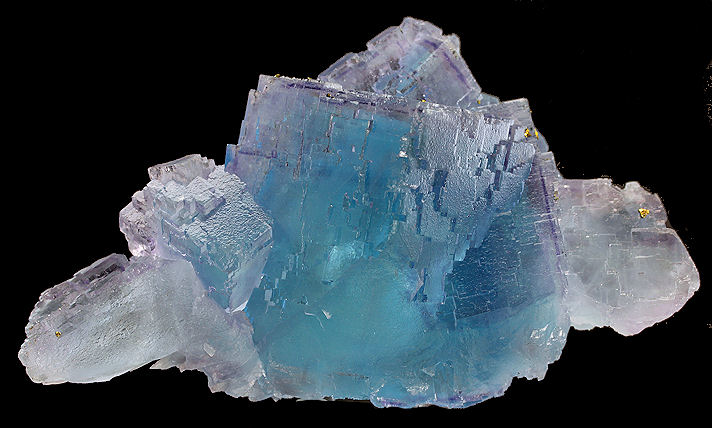
Gorgeous light ocean-blue colored Fluorite crystal cluster with outer purple zoning and minor golden Pyrite from the La Viesca Mine. Highly translucent with great luster. Super condition and looks even better in person.
#J9186
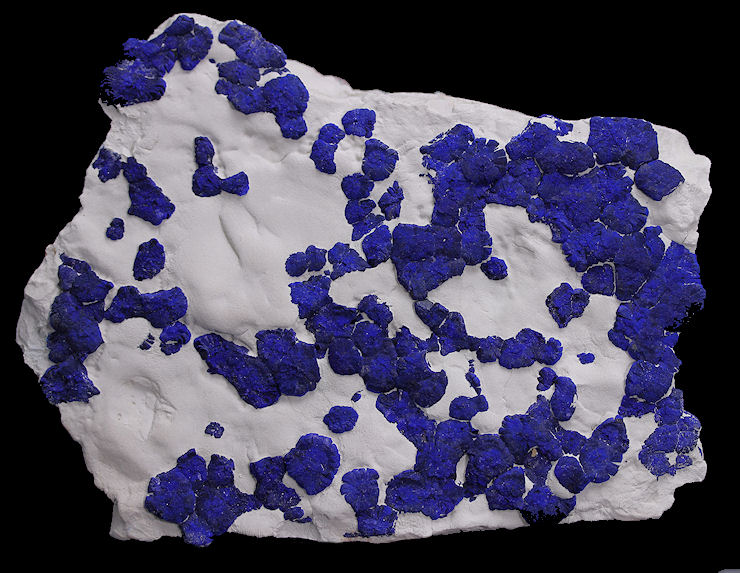
Azurite on Clay
Malbunka Copper Mine, Areyonga, Northern Territory, Australia
20.5 x 15.5 x 3.5 cm
$400
Large specimen of these unique Azurite crystal formations on Clay that came out of Australia a few years ago.
#J9188
#J9189
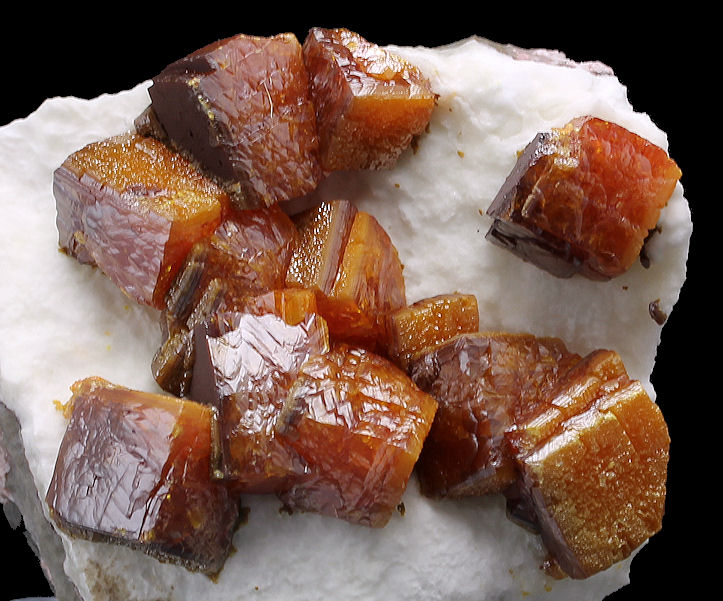
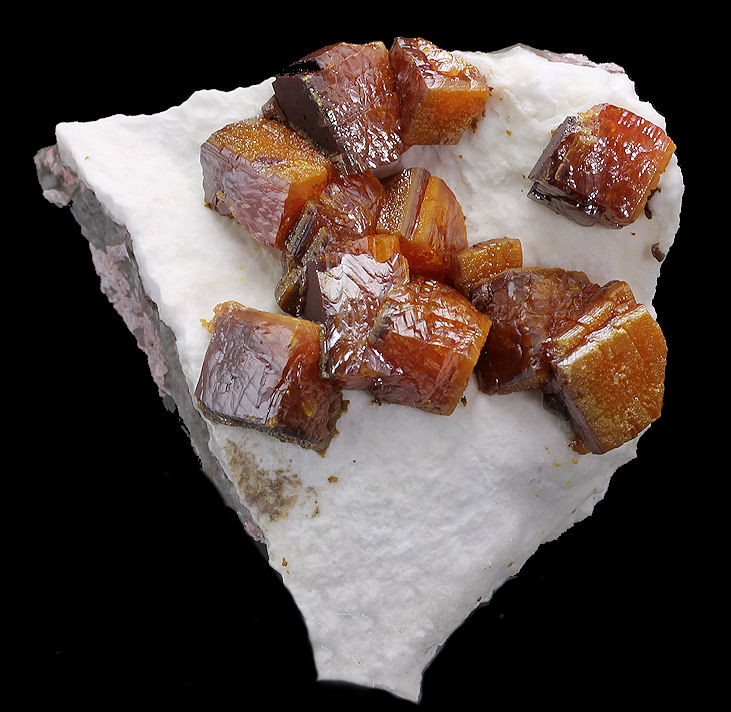
Wulfenite Crystals on Matrix
Erupcion Mine, Los Lamentos, Chihuahua, Mexico
7.5 x 6 x 4 cm
Ex-Vincent Rizzo Collection
$1,500
SOLD
Apophyllite on Calcite
Verchnly Mine, Main Ore Body, Dal'negorsk, Vladivostok, Primorskly, Far Eastern Russia
9 x 6.4 x 2.3 cm
$100
Highly lustrous, blocky, butterscotch colored Wulfenite crystals (to 1x1 cm) on contrasting Calcite from the famous Erupcion Mine in Los Lamentos. These are hard to come by at a reasonable price and is the last of three pieces recently acquired.
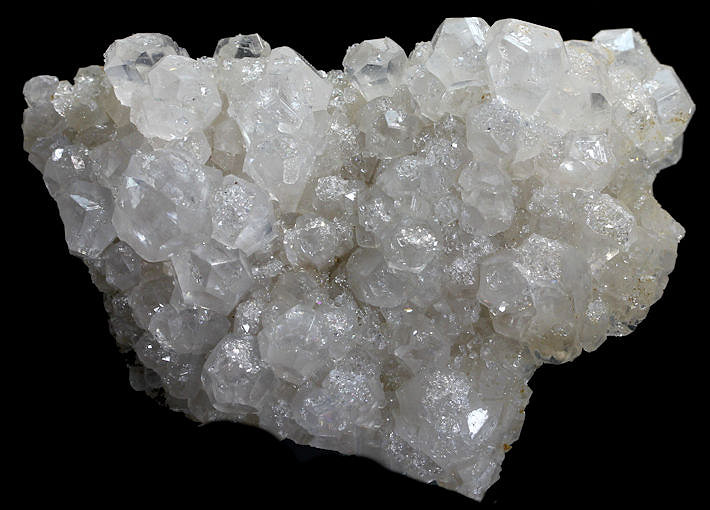
Pretty cluster of translucent Calcite crystals with a frosting of clear, sparkling Apophyllite crystals. Hard to photograph and is better in person.
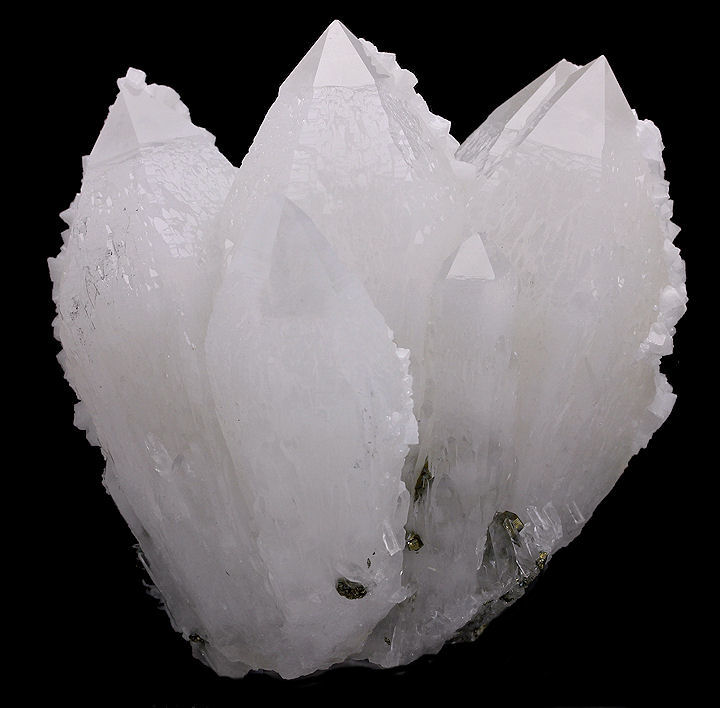
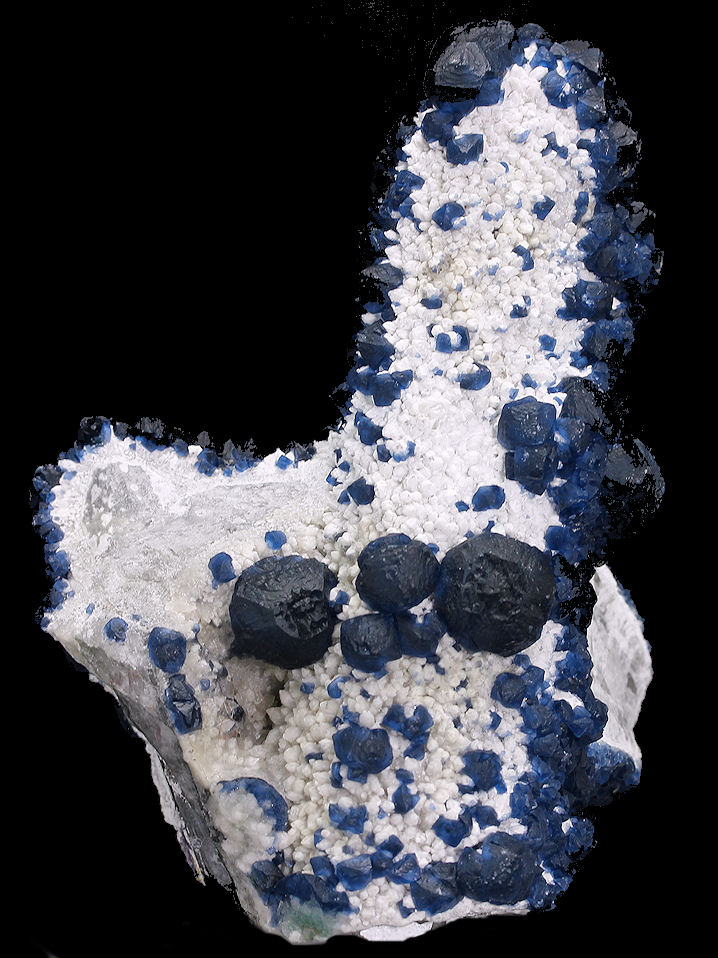
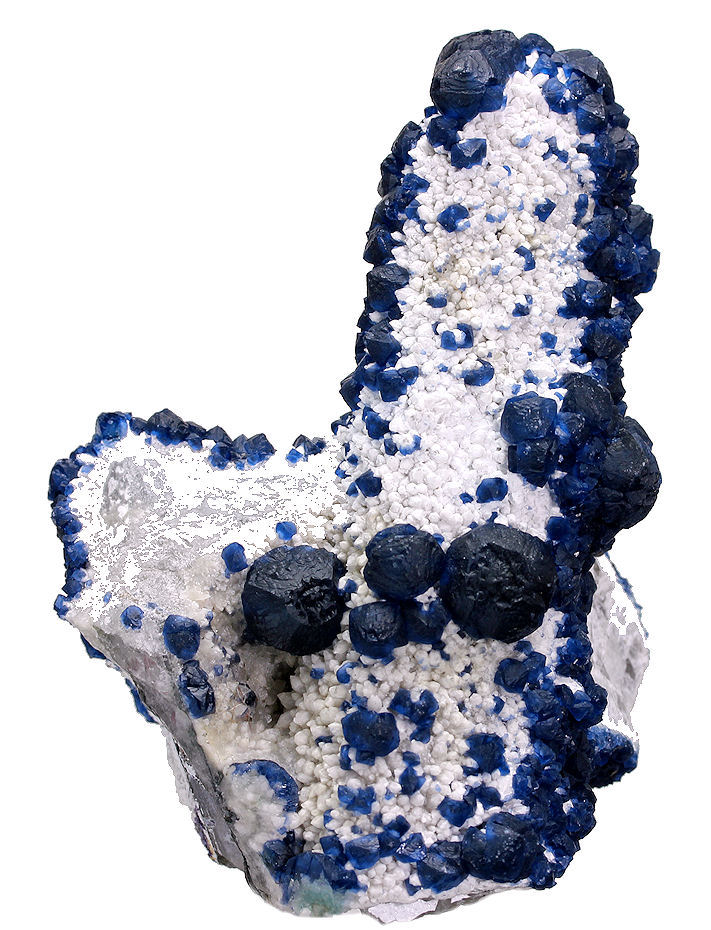
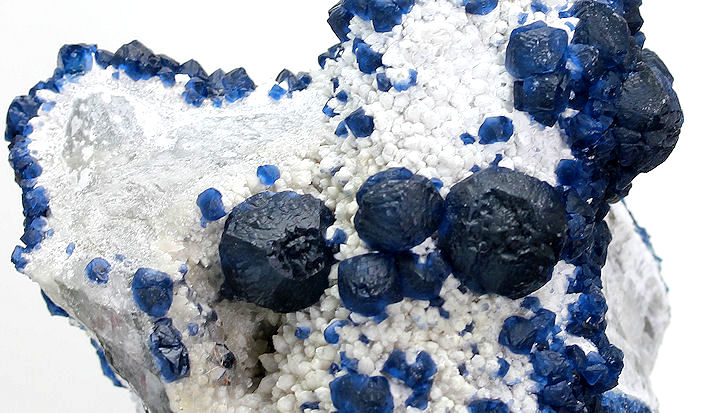
Shaft 4, Huanggang Mines, Hexigten Banner, Inner Mongolia A.R., China
12 x 8.5 x 6.5 cm
$1,500
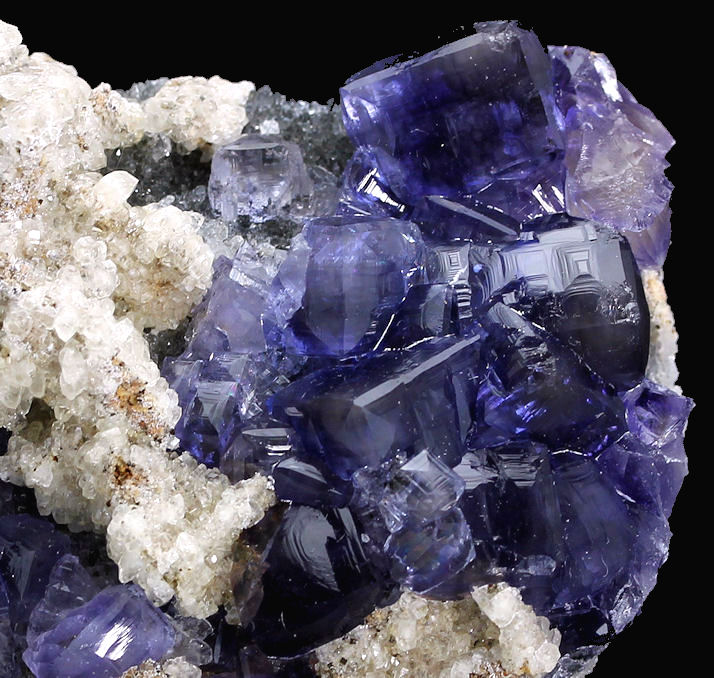
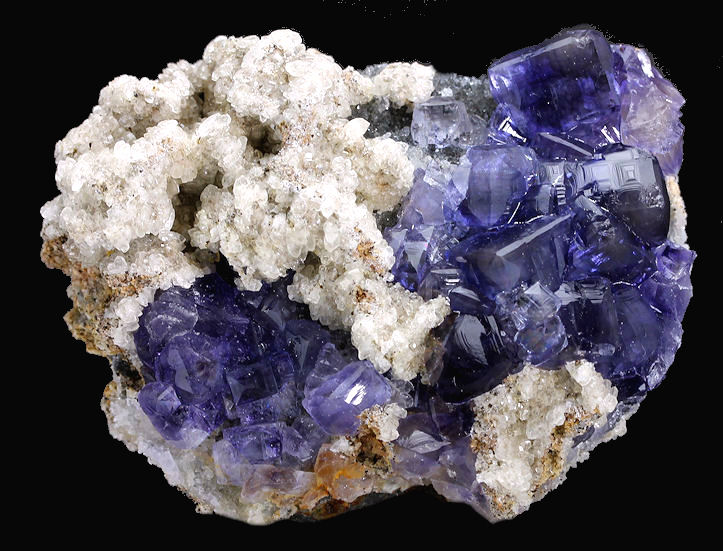
Very gemmy, purple crystals of Fluorite with Quartz from the Jaimina Mine. Very pretty.
Vivid deep blue Fluorite crystals, with shades that vary from indigo blue and navy blue on a white crystallized Quartz. The smaller Fluorite crystals are neatly cubic, with small dodecahedron bevels and well defined curvatures on faces and edges, while the largest crystals are unusually strongly rounded - a very uncommon shape for Fluorite.
Completely different from previous finds in Huanggang. The primary Quartz crystals are interesting, as well, with the center being colorless, clear & transparent, but with a coating of secondary, milky white Quartz. These specimens have been very pricy on the matrket since they came out, but this specimen is more reasonably priced.
#J9201
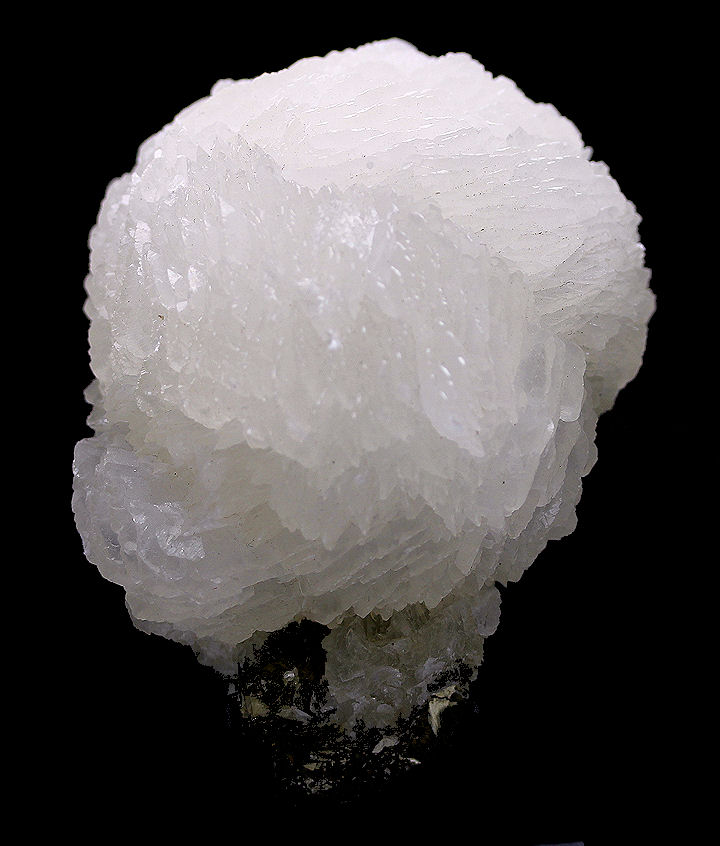
Calcite Rosette with Pyrite
Turt Mine, Satu Mare, Maramures, Romania
7.5 x 6 x 4.5 cm
$300
Intricate "Rosette'"type Calcite crystal formation with Pyrite from the long closed Turt Mine in Romania.
#J9193
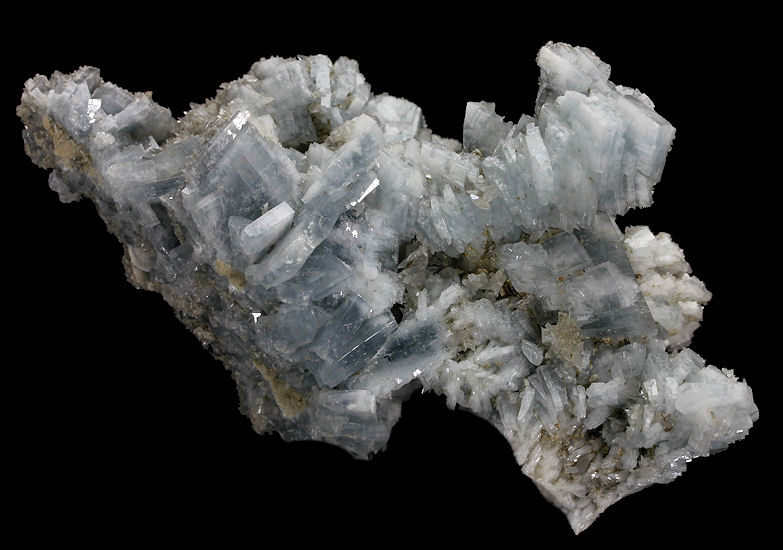
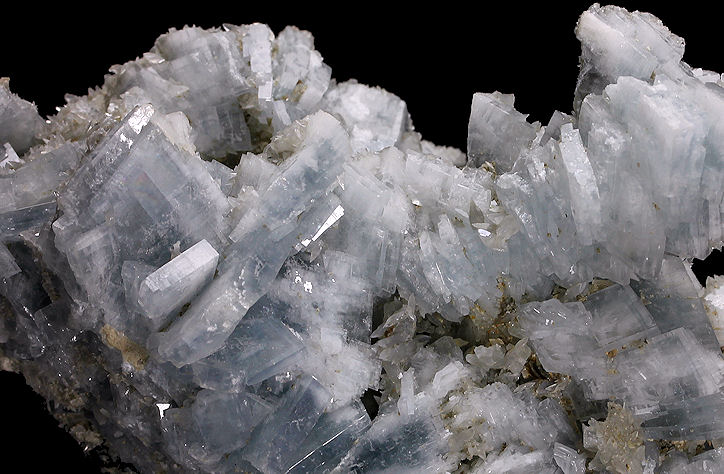
Blue Barite Crystal Cluster
Moscona Mine, Solis Corvera de Asturias, Villabona Mining Area, Asturias, Spain
13 x 8 x 4.5 cm
$300
Attractive cluster of gemmy to translucent, tabular crystals of light blue Barite from the famous Moscona Mine.
#J9204
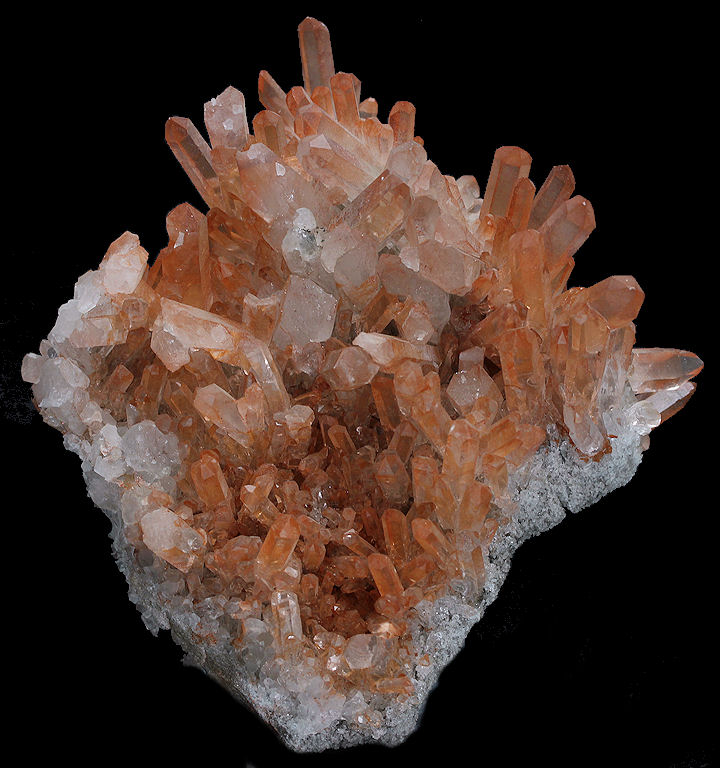
Tangerine Quartz Crystal Cluster
Corinto, Minas Gerais, Brazil
14.5 x 13 x 6.5 cm
$275
Large cluster of hematinic Quartz crystals.
#JAN 150
Calcite Crystals with Marcasite & Fluorite on Matrix
Irving Materials Quarry, Anderson, Madison County, Indiana, USA
10.4 x 7.7 x 5 cm
Ex-Dawson Calcite Collection
$990
Large, golden, barrel shaped Calcite crystals, measuring to 8.5 cm in length, with Marcasite and Fluorite on matrix. There appears to be a darker phantom in each Calcite, possibly an earlier Calcite that was later overgrown. In very good condition
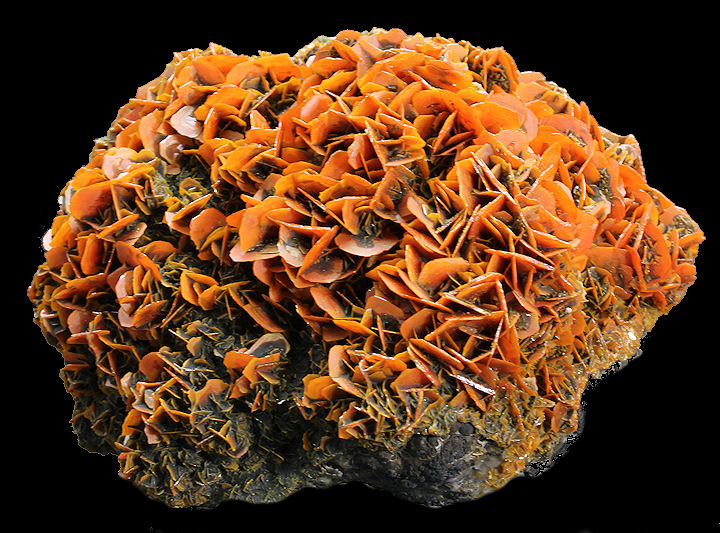
Wulfenite Crystals on Matrix
Xinjiam, Henan Province, China
11 x 8.5 x 5 cm
$900
SOLD
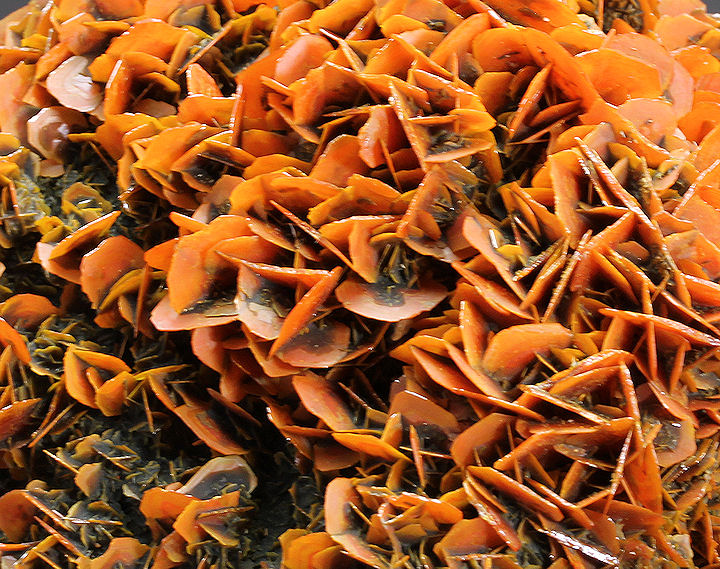
A very nice specimen from the recent find of Wulfenite in China. Numerous blades of lustrous, orange Wulfenite with very few damaged crystals.